
The Synergies in the Tools Used in Business and Sporting Performance
Imagine the scenario: You’ve been given a small pot of money (an ‘investment’). You are required to deliver results and ‘succeed’. The invested money needs to provide a return. There are milestones and lead times involved. You know that in order to be successful, change is required. These changes need to be explained & coached to the other stakeholders and anyone involved in the ‘process’. You need to introduce regular checks and balances to ensure progress is on track and to help identify where adjustment/coaching/reviews are required. You must ensure your resources (both financial, technical, and human) are deployed efficiently, with minimal waste.
I’m sure the above sounds familiar, even in its bare, summarised form. But what if the ‘investment’ was in a cycling team? What if success was about performing successfully in bike races? Should the metrics and processes involved be necessarily different? Here’s what I’ve learned/applied to the project I’ve been proud to be an ongoing part of.
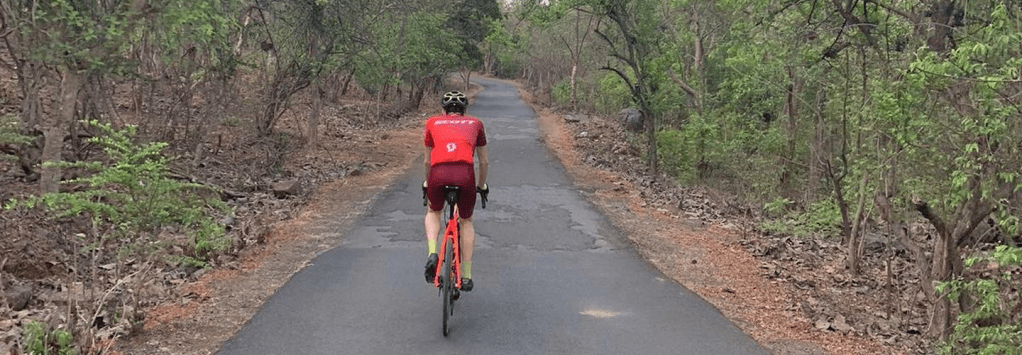
As documented elsewhere, I’ve been working with Scott Sports India for the last 4 years, helping their individually supported athletes (from all over India) with coaching, support & ‘performance’ input (‘performance’ has been used as an all-encompassing word for all on-the-bike and off-the-bike activities). The brand had harbored a long-held ambition to create a cycling team, not just in name, but to provide a platform to deserving talent showing potential.
I also coach many individuals, across the whole accomplishment spectrum (from keep-fit first-timers to aspiring medallists at the National level). One of my clients runs a large real estate business (Kanakia Group) and was keen to do something positive for the sport.
Having introduced the two parties, who quickly found an alignment in their respective visions, a team was established in August 2019 and furnished with equipment, a shared house, a budget, a race plan, multiple miscellaneous support avenues…………and me.
1. Vision, Objective Setting & Goals
We were clear from the outset that we wanted to do something different. Something that had not been done in India before (at least not in a road cycling context) & something that could begin to mirror some of the ‘elite’ road set-ups seen in Europe & therefore offer a platform to aspiring candidates to emulate the lifestyle of their European peers. Firstly, we decided that the team members would all live together under the same roof & train together (whenever their programs allowed). Secondly, we wanted to see accountability and responsibility shared among housemates for shopping, cooking, cleaning & laundry, etc (it should be noted that in India, domestic ‘help’ for cooking & cleaning is widely available & extremely cheap, even for what by European standards would be considered minor blue-collar jobs). This would present a significant culture shock to the riders who, culturally, would not have been exposed to the level of domestic discipline we had in mind. Thirdly, we wanted to see adherence to repeated daily routines, including eating, training, hygiene & sleeping.
We did not discuss ‘goals’ in terms of winning races. We strongly believed that if we could put in a structure & process (terms I would come to continuously refer to) and get the basics right, the performance would follow.
2. Stabilise, Standardise, Improve

After letting the riders find their own feet over the first couple of weeks, I started to increase my involvement beyond the ‘coaching plan’ spectrum. The first, and somewhat alarming, practice I identified was the diet. Not just what was being consumed, but when and how much. Quite simply, the diet was out of control, evidenced by weight loss of all team members plus runny noses and coughs. Using a ‘lean’ (excuse the unintended pun!) approach from my days in manufacturing, I recognized I had to stabilize the current practices quickly, before looking to standardize & then improve.
To begin with, I put some simple rules in place such as no fasted rides (i.e. riders could not go out on an empty stomach, regardless of the intended intensity). A snack had to be consumed upon completion (e.g. banana, omelet, sandwich, etc) & lunch had to be eaten before 2pm, followed by a cooked evening meal before 7:30pm.
Once all the riders had indicated they were adhering to these rules (& were actually observed doing so as well) we began to standardize the food menu process. Via a group discussion, we established quick, easy, and healthy options for breakfast (e.g. toast or cereal), post-ride snacks (e.g. eggs, fruit smoothie, yogurt, nuts), and daytime snacks (seasonal fruit, nuts, carrots, etc).
Within weeks, the weight loss in the first few weeks was regained, and we saw a rapid decline in the cough & cold symptoms.
More recently, we’ve started work on improving each individual’s diet by helping them understand how many calories they need to consume a day (‘hard’ days and ‘easy’ days can vary greatly) and where these calories might come from (food types). We’ve done the same with protein intake, looking at different protein sources and how much / when they need to be consumed.
A very simple, hand-written diet poster was put up on one of the communal walls as a reminder.
3. What should we be doing? How should we be doing it? How do we know we’re ‘in control’?
After letting the riders find their own feet over the first couple of weeks, I started to increase my involvement beyond the ‘coaching plan’ spectrum. The first, and somewhat alarming, practice I identified was the diet. Not just what was being consumed, but when and how much. Quite simply, the diet was out of control, evidenced by weight loss of all team members plus runny noses and coughs. Using a ‘lean’ (excuse the unintended pun!) approach from my days in manufacturing, I recognized I had to stabilize the current practices quickly, before looking to standardize & then improve.
To begin with, I put some simple rules in place such as no fasted rides (i.e. riders could not go out on an empty stomach, regardless of the intended intensity). A snack had to be consumed upon completion (e.g. banana, omelet, sandwich, etc) & lunch had to be eaten before 2pm, followed by a cooked evening meal before 7:30pm.
3. What should we be doing? How should we be doing it? How do we know we’re ‘in control’?
‘3D’ was something I’d heard from the former England World Cup Winning Rugby Coach; Sir Clive Woodward discuss in a podcast. It can be applied to any element of coaching athletes:
‘Discover’ what can we do differently? Where can we improve? What areas of training & off bike activities can we re-think?
Once a topic has been ‘discovered’, then it’s time to ‘Distil’ it – break down every element of the topic and understand it in detail. Evaluate it, re-learn it & optimize it. Then appreciate what this actually means by finally applying the ‘Do’ i.e. DO IT. Make the ‘how’ that you do it the new ‘normal’. Ensure it is repeatable and repeated.
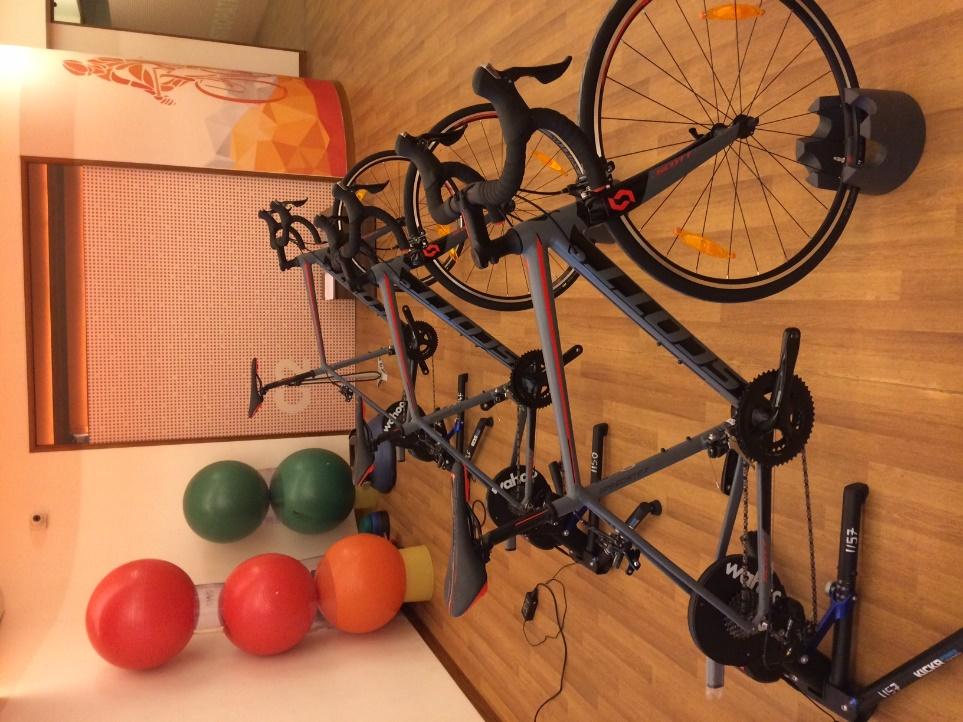
One simple area where we applied this was in post-ride equipment maintenance – ensuring any adjustments or cleaning are taken care of expediently, water bottles washed & refilled (& stored in the fridge ready for the next day) as well as head units downloaded and re-charged. This greatly reduced rides starting late & therefore was a way of giving time back to the riders.
5. Thinking Correctly Under Pressure (TCUP)
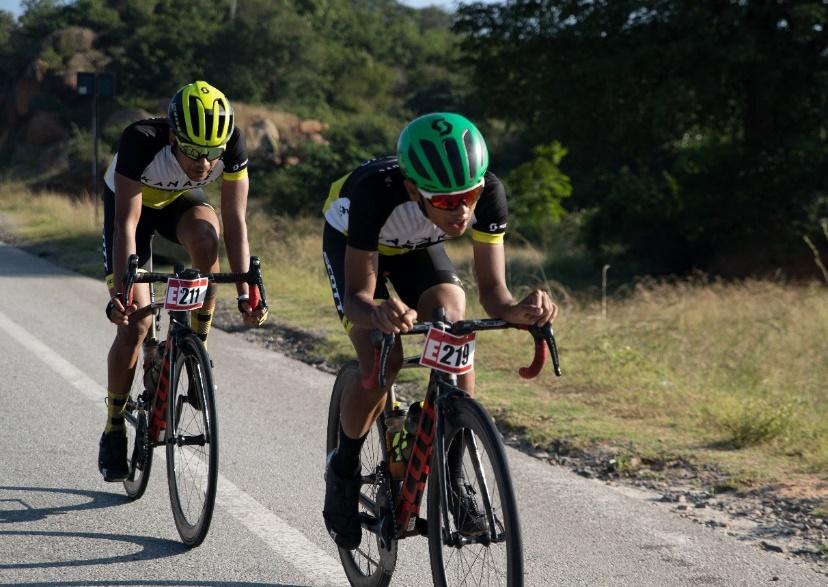
This was another concept shared by Sir Clive Woodward and applied to their successful Rugby World Cup campaign (I have subsequently read about the concept in Dr. Dave Alred’s excellent book ‘The Pressure Principle’). It involves a team or individual breaking down a number of scenarios that could happen during an event and deciding what should be done, how it should be done, and by whom. The scenarios and actions are agreed upon by the team themselves as they will be the people having to make the decisions in real time. It aligns tactics and responsibilities throughout the whole team and creates a deeper strength in unity. We applied the tactic ahead of a criterium to agree on who would cover breaks/attacks in each part of the race and under what circumstances. It really made a difference in ensuring the correct decision could be taken; this process is not just about thinking clearly but ensuring the right course of action is applied.
6. LEAN; Simple Problem Solving (4 steps)
This is something I’ve used to analyze and explain their progress to individual riders. It was a powerful tool that was regularly used in my previous career in manufacturing. It’s very factual & helps avoid ambiguity, driving toward clear, actionable & measurable solutions.
Step 1. As it says in the title, there are 4 steps. If we’ve identified that we have a problem, then the first step is all about defining the problem. To do that we must be able to accurately understand what is currently happening Vs what should be happening. That analysis then gives us a gap. From a coaching point of view, the gap could be defined in numbers e.g. watts, cadence rpm, speed, heart rate, or time. Equally, it could be a technique-related issue (posture, cornering, getting out of the saddle).
Step 2. Knowing what the gap is, we can then start to identify the cause(s), prioritizing if there is more than one. In coaching terms, we can start to hypothesize that the root cause is (for example) strength, speed (cadence), technique related, etc.
Step 3. Confirm cause & effect. In this phase, we can conduct experiments (benchmark testing after specific workouts designed to address the problem) to confirm our hypothesis. Depending on the gap and the root cause, the time-lapse over this period could be days, weeks, or months.
Step 4. Confirm Countermeasures. Here we analyze the results and, if positive, adopt new processes (training programs – these can be individual sessions or a block of progressive workouts over a number of weeks with prescribed recovery, etc). If the results are not as we hoped, we ask why? and try another hypothesis from Step 2. With positive results, we can share the learning, provide new work-outs to other athletes & understand in greater depth how individuals adapt to different workloads over given time periods.
One of the ways I used this was in understanding why riders were getting beaten in sprints at the end of races. The ‘gap’ amounted to little more than a second or so over the last 20 seconds of the race. One root cause that we prioritized was cadence. We could see from the data that peak power and 5-second power were where we wanted them to be but, cadence was peaking at less than 120rpm. We could also see the time taken to accelerate to peak rpm. Some simple mathematics showed the possible gains of a) hitting peak rpm quicker and b) hitting a higher peak (in the same gear) and workouts were prescribed to provide some improvement. After 3 weeks of progressive workouts, we were able to benchmark improvements against the same test 3 weeks previously and understand progress.
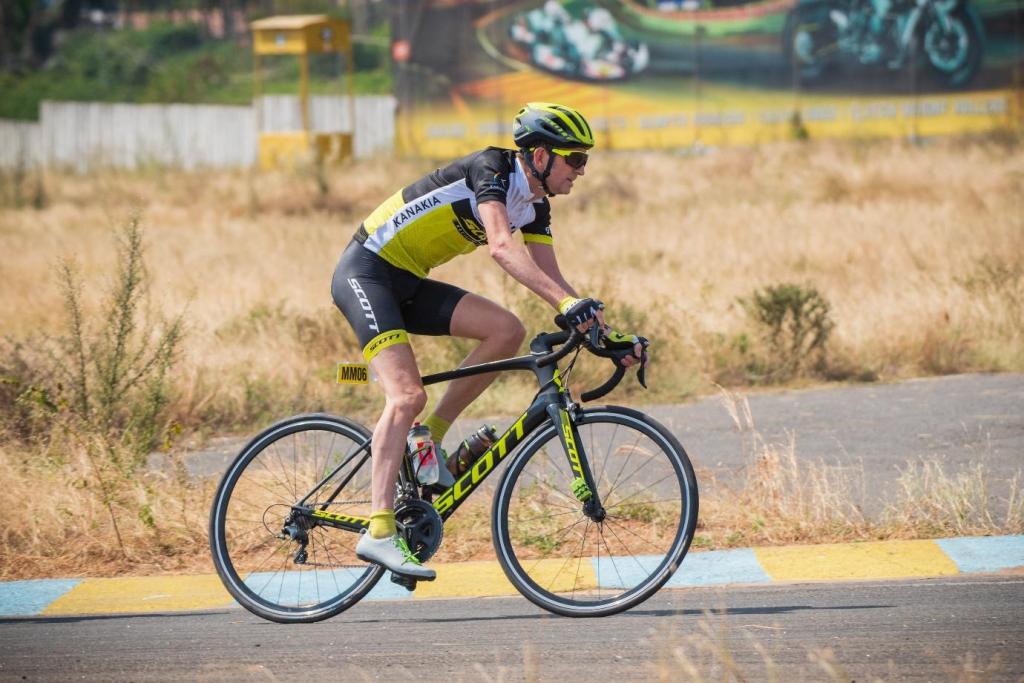
In summary, the above is not necessarily a new proposal for coaching methods, but more an illustration of the tools that I’ve learned outside of sport & coaching and how I’ve been able to apply them successfully in helping me help others. The saying goes that we can always learn more and I’ve observed that equally, there will always be opportunities to apply what we already know, regardless of the field it was attained in.
 Nidas Cycle Coaching
Leave a comment